How to Plan an Unforgettable Destination Wedding in Tuscany: A Photographer’s Guide
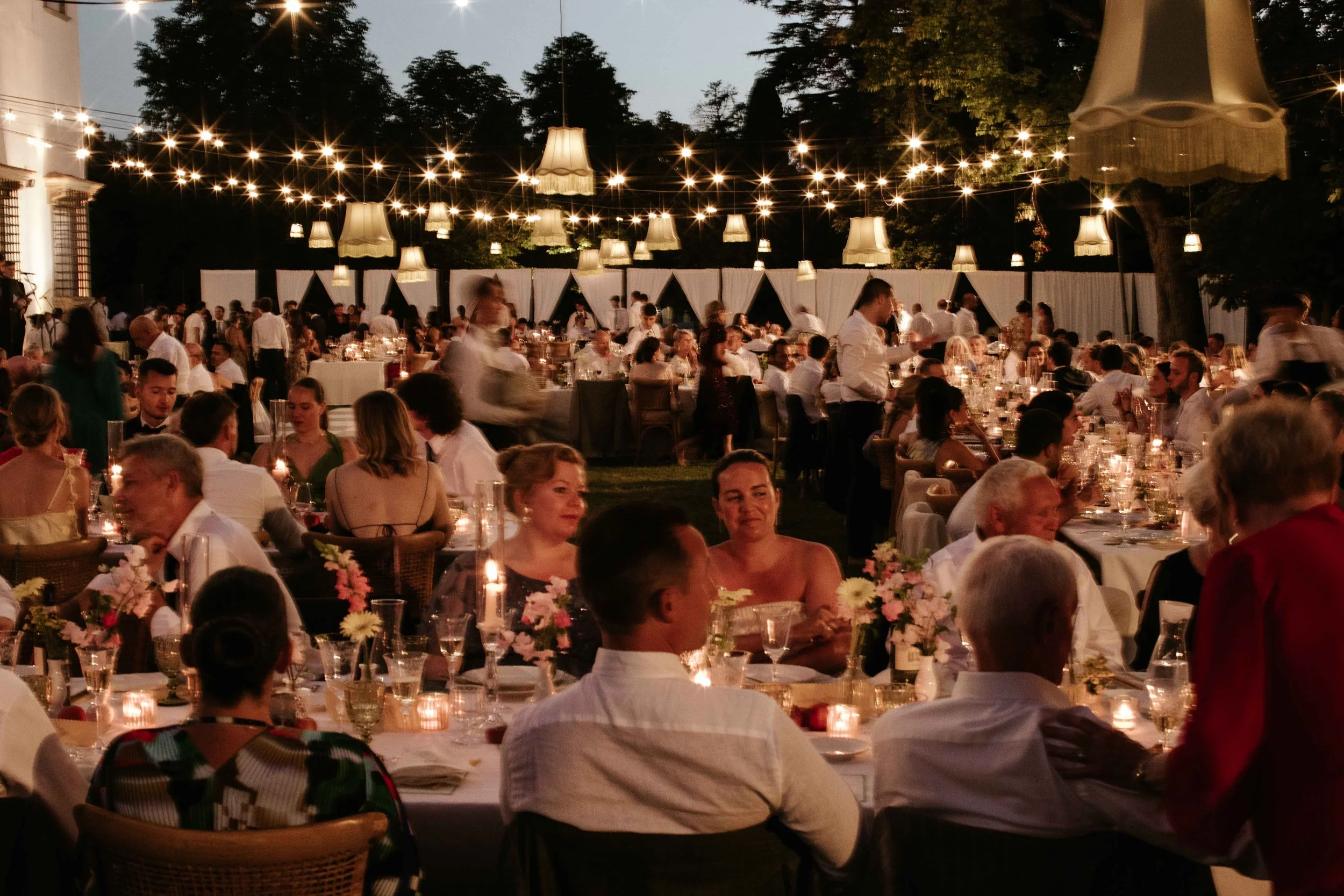
Dinner at Villa Corsini, Florence
Tuscany is more than a location; it’s a feeling. From the rolling cypress-lined hills of the Val d’Orcia to the timeless elegance of Florentine villas, it’s the ultimate dream for couples seeking a blend of history, art, and world-class hospitality.
As a wedding photographer specializing in a documentary and editorial style with a film soul, I’ve seen firsthand how the Tuscan light can transform a celebration into a living masterpiece. If you are planning your wedding from the US or abroad, here are my top tips to ensure your Italian elopement or wedding is as seamless as it is beautiful.
1. Choosing Your Tuscan Vibe
Tuscany offers diverse landscapes. Depending on your style, you might lean towards:
The Val d’Orcia: For those iconic, sweeping hilly views (perfect for sunset portraits).
Florence: For a high-fashion, editorial feel among Renaissance architecture.
Chianti: For intimate vineyard dinners under the stars.
2. The Golden Rule of Timing
For the best "film vibes" and soft, flattering light, timing is everything.
Season: May, June, September and the first part of October are the gold standard. July and August are stunning but can be very hot for outdoor ceremonies.
The "Golden Hour": In Tuscany, the sun dips behind the hills creates a magical haze. We always plan your couple portraits during this window to get those authentic, nostalgic shots.
3. Navigating the Changing Climate
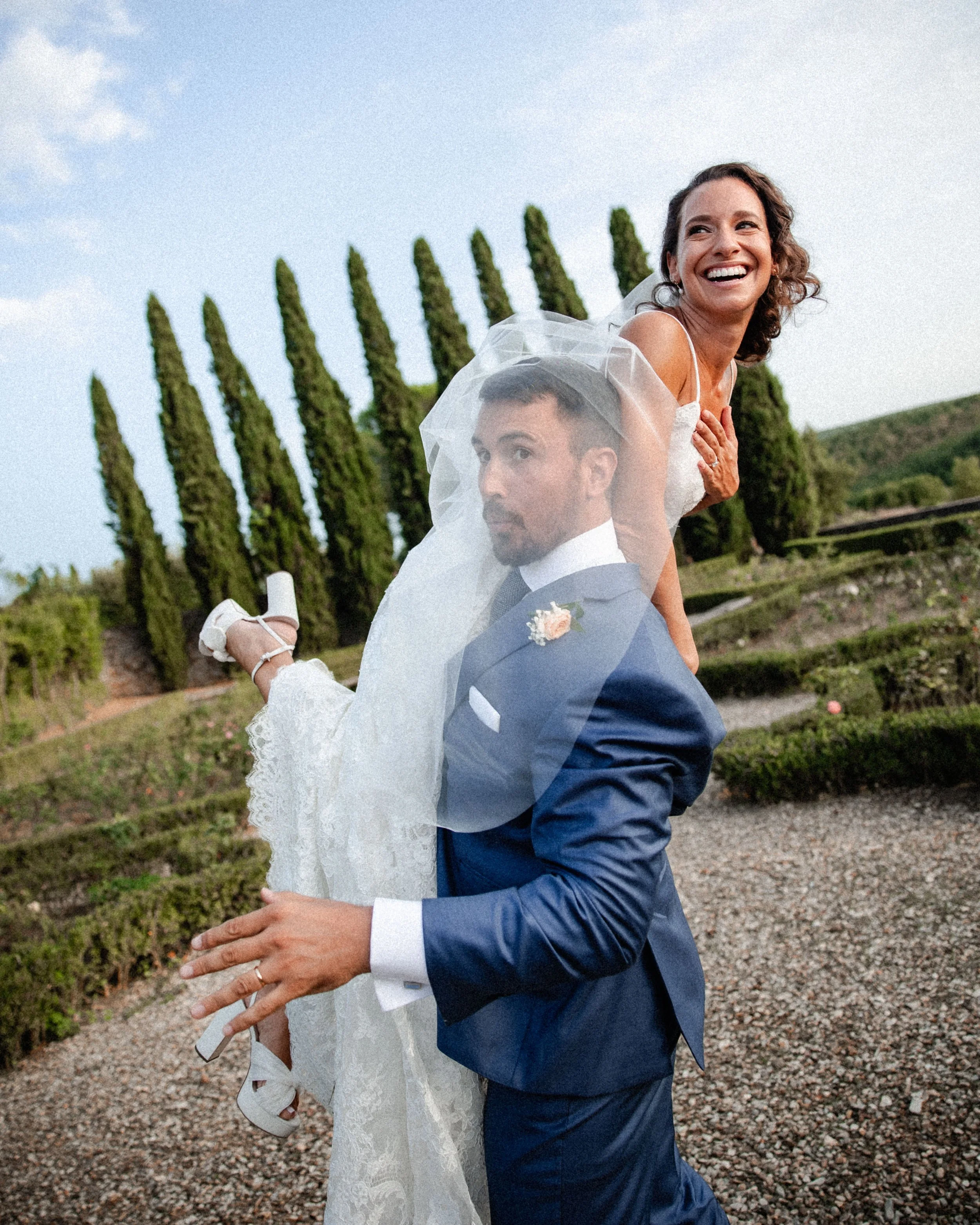
In recent years, the legendary Tuscan climate has become more unpredictable. As a photographer, I’ve adapted my approach to ensure that your "film-inspired" aesthetic remains flawless, regardless of the weather.
The Heat Factor: July and August now frequently see temperatures above 35°C (95°F). To capture those editorial-style portraits without the discomfort of the midday sun, I always recommend starting ceremonies later in the evening. This protects your makeup, your guests' comfort, and gives us that soft, low-contrast light that looks incredible on analog film.
The "Plan B" is the New Plan A: Rain showers in May or September can be sudden. When scouting locations, I don't just look for the pretty spots; I look for the light in the shadows. Porches, historic cellars, and villa hallways offer a moody, cinematic backdrop that fits a documentary style perfectly.
Light Sensitivity: With brighter, harsher sunlight becoming more common, my film camera is a secret weapon. Film handles "highlights" (the brightest parts of a photo) much better than digital, preserving the detail in your white dress even under a brilliant Italian sun.
4. Documentation vs. Art: Finding Your Photographer
When booking a photographer from abroad, look for a balance. You want someone who can:
Capture the Raw Emotion: A documentary approach ensures you don’t spend your whole day posing. It’s about the real laughs and the quiet tears.
Elevate the Aesthetic: My editorial eye ensures that even the spontaneous moments look like they belong in a luxury magazine.
The Magic of Film: Incorporating analog photography adds a layer of grain, texture, and soul that digital alone cannot replicate. It’s timeless.
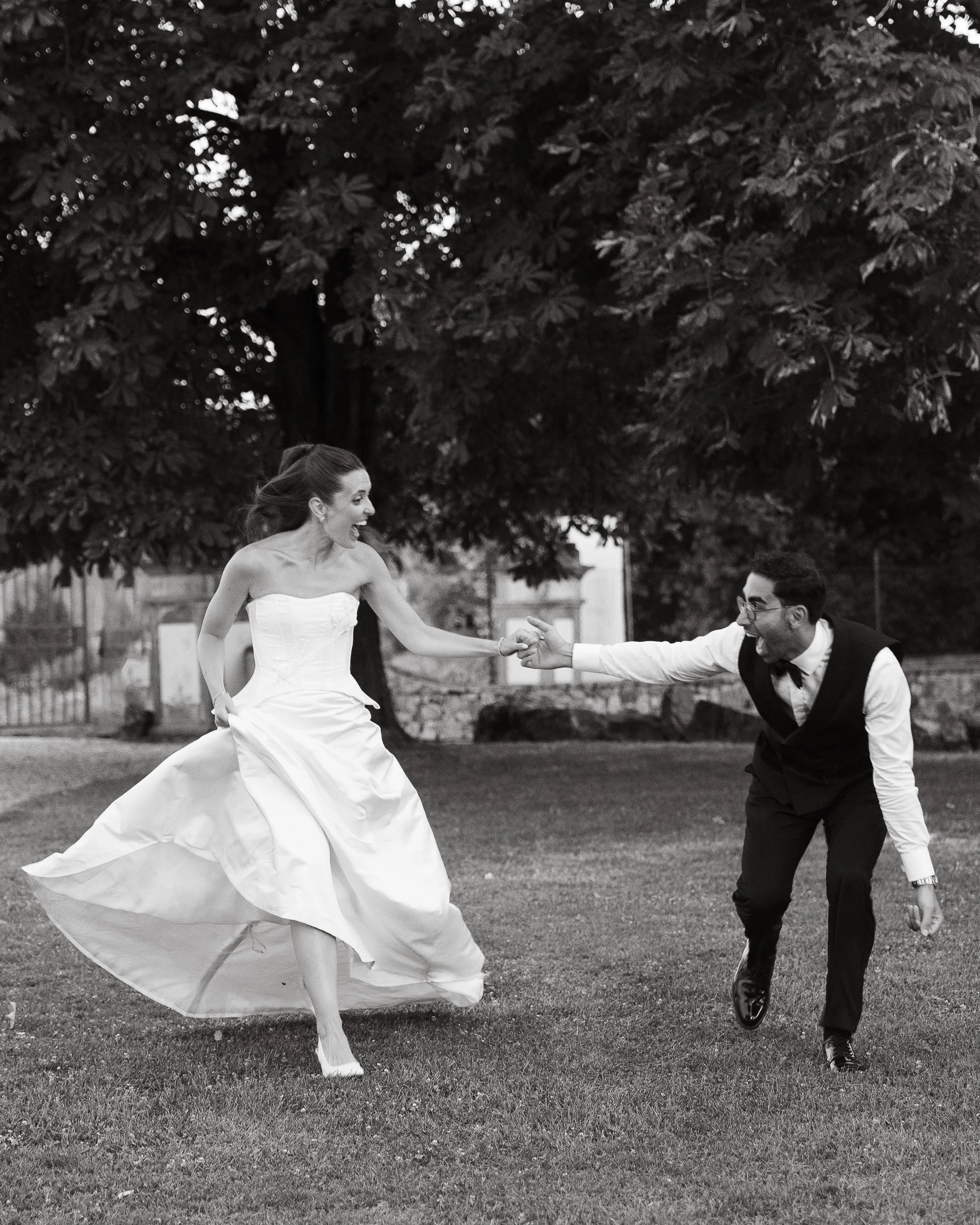
Sarah & Amin, couple session after the ceremony in Tuscany
5. Navigating the Logistics
The Legalities: Most international couples opt for a symbolic ceremony in Italy after a civil ceremony in their home country to avoid the paperwork "bureaucracy."
Local Vendors: Hiring an italian photographer is a game-changer for coordinating with caterers and florists.
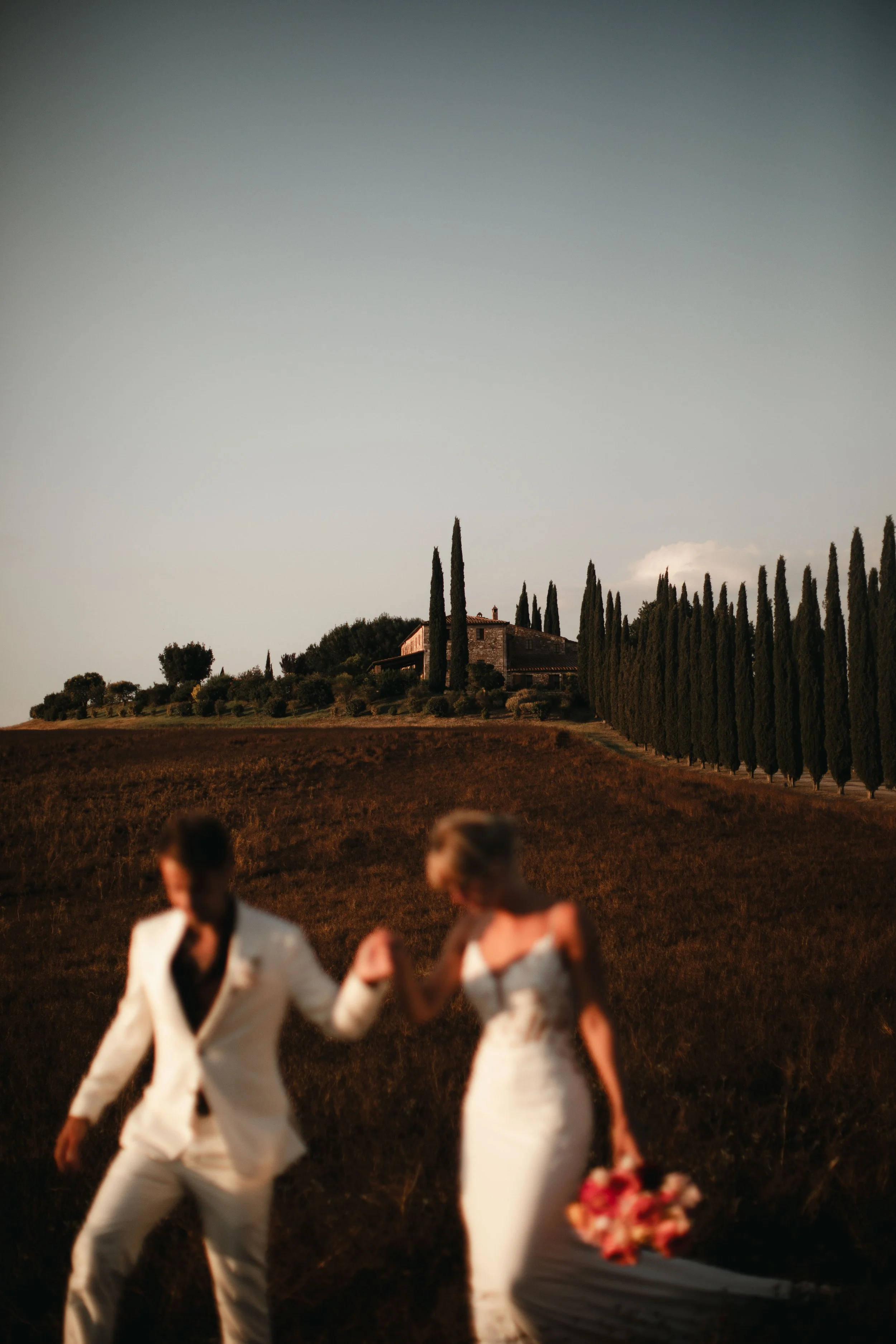
Val D’Orcia at sunset
Tuscany is a place that demands to be felt, not just seen. My goal is to capture your day so that 20 years from now, you can look at your photos and still smell the rosemary and feel the warm Italian breeze.